Florida Cockroach Identification: Every Species You Will Meet
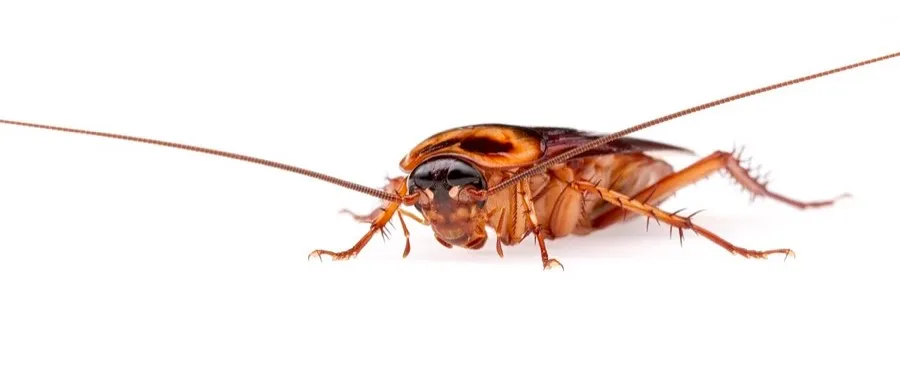
Florida hosts more cockroach species than any homeowner wants to know about, but only seven show up in and around homes often enough to matter. Identifying which one you have is not trivia: it decides whether you have a wandering outdoor visitor or a breeding indoor infestation, and those are completely different problems with completely different fixes.
The quick identification table
| Species | Size | Look | Where you see it | Flies? |
|---|---|---|---|---|
| American (palmetto bug) | 1.5 to 2 in | Reddish brown, yellow band behind head | Bathrooms, garages, at night | Yes, clumsily |
| German | 0.5 in | Tan with two dark stripes behind head | Kitchens, breeding indoors | No |
| Smokybrown | 1.25 to 1.5 in | Uniform dark mahogany, glossy | Attics, soffits, trees | Yes, strongly |
| Australian | 1.25 in | Like American, yellow side stripes on wings | Plants, porches, garages | Yes |
| Brown banded | 0.5 in | Light bands across the body | Bedrooms, furniture, high shelves | Males do |
| Asian | 0.6 in | Nearly identical to German | Outdoors, flies TO lights at dusk | Yes, eagerly |
| Florida woods | 1.5 in | Very dark, stocky, almost wingless | Mulch, wood piles, slow mover | No |
The big roaches: usually visitors
American cockroach (the palmetto bug)
Florida's most famous insect: up to two inches, reddish brown with a pale yellow band behind the head, and capable of ungraceful flight that has ruined many evenings. It lives outdoors and in sewers and comes inside through gaps and drains, usually at night, usually near moisture. Seeing one or two a month means you live in Florida, not that your home is infested. Exclusion and an exterior barrier handle it; the roach guide covers the playbook.
Smokybrown
The attic roach. Uniform glossy mahogany with no yellow markings, a strong flier drawn to lights, and a moisture lover that nests in soffits, gutters full of leaves, and tree holes. Finding them upstairs or around ceiling fixtures usually points to an attic or roofline population, which changes where treatment happens.
Australian
The one that causes the most misidentification: it looks like a slightly smaller American cockroach, but the outer edges of its wings carry distinct pale yellow stripes, and there are yellow markings on the shield behind the head. If you searched "striped roach," this is usually your insect. It loves potted plants, porches, and greenhouses.
Florida woods cockroach
Big, very dark, stocky, nearly wingless, and slow. Locals call it a stinking roach because it releases a defensive odor when threatened. It lives in mulch, leaf litter, and wood piles and wanders indoors by accident. It does not breed inside and barely runs from you; relocation by dustpan is a legitimate treatment.
The small roaches: this is where infestations live
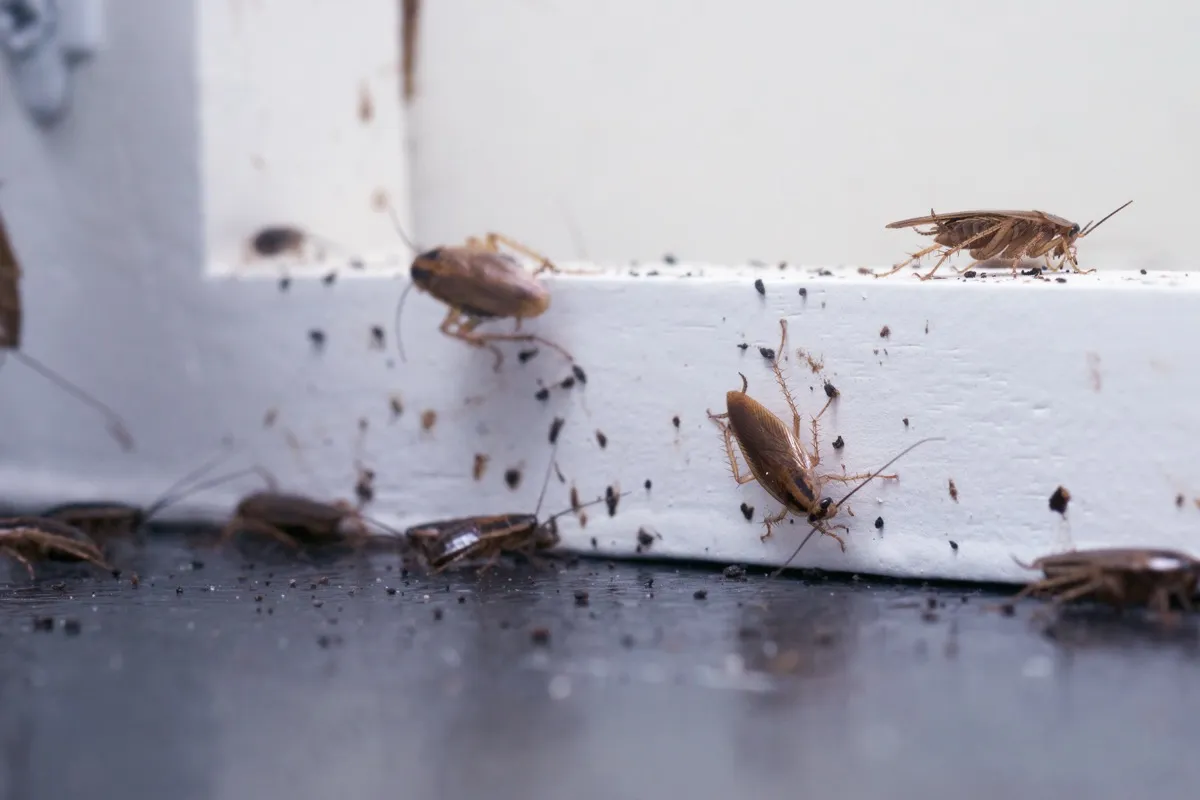
German cockroach
Half an inch, tan, with two dark parallel stripes behind the head, and it does not live outdoors in Florida: if you are seeing German roaches, they are breeding in the building. Kitchens and bathrooms first, then everywhere. This is the species behind nearly every serious indoor infestation in the state, and spray cans make it worse by scattering the colony. Gel baits and patience win; the roach guide explains the full cleanout.
Brown banded
The German roach's drier cousin: same small size, but with light tan bands across the body instead of head stripes, and a preference for warm, dry, high places, bedroom furniture, picture frames, electronics, closet shelves. Finding small roaches in rooms with no food or water is the brown banded calling card, and it matters because baits placed only in kitchens will miss them.
Asian cockroach
Nearly identical to the German in size and stripes, with one behavioral giveaway: Asian roaches live outdoors in lawns and leaf litter and fly readily toward lights at dusk, landing on screens and slipping inside when doors open. A "German roach" that flew in from the yard at sunset is almost certainly Asian, and the treatment is outdoor focused, not a kitchen cleanout.
Why the ID changes the treatment
- Big roaches (American, smokybrown, Australian, woods): outdoor populations wandering in. Fix the building envelope and the exterior; indoor fogging is theater.
- German: indoor breeding infestation. Gel baits, growth regulators, multi visit cleanouts, and in multifamily buildings, coordination with neighbors.
- Brown banded: like German, but bait placements must extend beyond kitchens to the warm dry rooms.
- Asian: looks like an infestation, is actually a yard problem arriving by air. Outdoor treatment and light discipline.
Costs for each scenario, from exterior programs to full German cleanouts, are in the Florida cost guide.